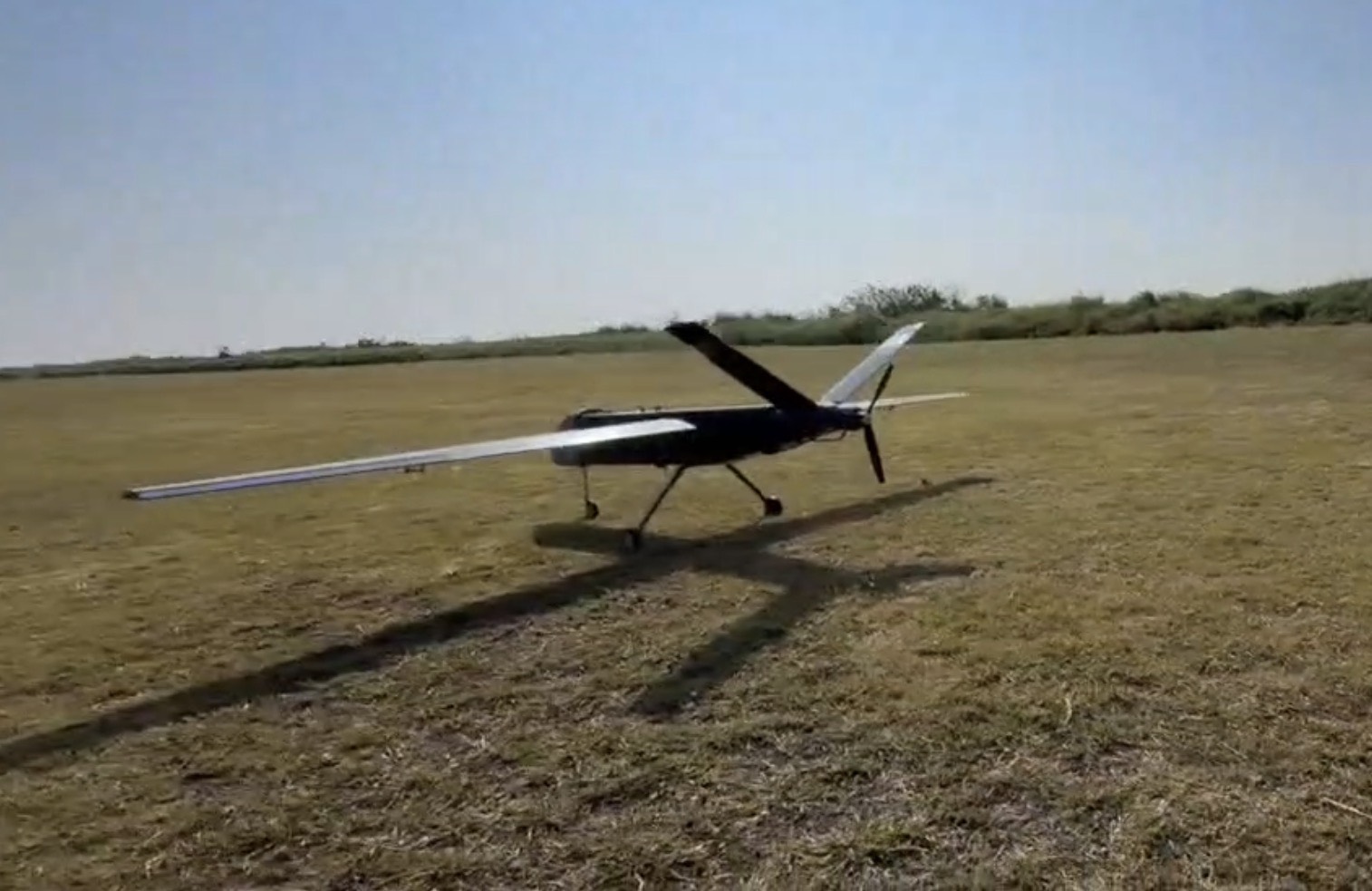
Taiwan Jets Manufacturing Co. Ltd. (TJMC) has announced the successful development and flight testing of its high-speed fixed-wing UAV test platform, in collaboration with its primary partner, Jing Ming Industry Co. Ltd (JMG), and several key suppliers. During flight trials, the platform achieved high-speed target velocity ratings, demonstrating TJMC’s integrated capabilities in large-scale fixed-wing and special-purpose UAV airframe design, composite material manufacturing, final assembly, electronics integration, and flight test validation.
TJMC operates under a hybrid model of "In-house R&D and Production + Strategic Supply Chain OEM/ODM," utilizing flight test data to continuously refine designs and optimize manufacturing processes.
The High-Speed Fixed-Wing Platform
Powered by a jet propulsion system, this platform is positioned as a high-performance validation vehicle for flight testing and special missions. Key features include:
- High-Speed Performance: Reaches speeds in the hundreds of km/h range under test conditions, offering the ability to validate flight envelopes within high-velocity domains.
- High Maneuverability: Enhanced control and reliability through advanced aerodynamic and structural design, supporting test requirements for high-load turns and complex maneuvers.
- Test Feedback: Communication links demonstrated excellent anti-interference performance during multi-party collaborative testing. These results will be used for ongoing system integration and design iterations.
Core Strategy: Non-Red Supply Chain & Localized Manufacturing
TJMC prioritizes supply chain security and traceable manufacturing. The company focuses on the design, production, and contract manufacturing (OEM/ODM) of large fixed-wing and special-purpose UAV airframes while strictly adhering to a "Non-Red" (non-PRC) supply chain strategy.
By collaborating with key manufacturers on the development and testing of critical components—including equivalent material and dual-source BOM (Bill of Materials) planning—TJMC ensures scalability, regulatory compliance, and supply stability.
- Avionics & Flight Control: Utilizes open-source architectures (e.g., Betaflight / ArduPilot + MAVLink) with modular integration based on mission requirements. Critical functions are co-developed, validated, and implemented with partners.
- Communication & Imaging: Integrates ELRS/CRSF, RFD data links, and 5.8GHz OSD video solutions. Consistency is ensured via OTA (Over-the-Air) measurements in RF laboratories. All critical modules utilize Non-Red components.
- Propulsion & Structure: Integrates jet power with airframe structures using advanced composite techniques (vacuum bagging, autoclave/oven curing, infusion/RTM, etc.) and strict process controls to optimize strength-to-weight ratios and consistency.
Future Outlook: Modular Integration and Intelligent Capabilities
The R&D team is advancing "Modular Design" and portable mission payload architectures. Plans are underway to integrate intelligent capabilities—such as image recognition, environmental sensing, and automated mission logic—to help clients expand across different platforms and scenarios.
R&D Roadmap:
- Initial Phase: Focus on AI-assisted flight for single units, environmental sensing, and preliminary mission decision-making.
- Mid-term Phase: Integrate image recognition and automated mission workflows to enhance reliability and maintainability.
- Long-term Goal: Build a comprehensive UAV application ecosystem by enhancing multi-vehicle coordination and system integration, underpinned by compliance, safety, and traceability.
TJMC remains committed to Non-Red supply chains, localized manufacturing, and rigorous testing to provide customers with the most reliable UAV design, manufacturing, and integration services.